English
 English
Search

2026/11/12

For months, forwarders across the China–U.S. lane have been asking the same question: what exactly happened around January 15? Was there a single new U.S. customs rule that killed the old “double clearance, tax-inclusive” model overnight?
The short answer is no. There was no single January 15 regulation that ended the model. What actually happened was slower, more structural, and far more consequential: a new legal definition of who can be an Importer of Record — coupled with an enforcement regime that made the old shared-IOR playbook operationally unworkable. If you are still sourcing logistics on the assumption that a forwarder can “handle the import side” with a borrowed or shared importer number, this is the moment to understand what changed and what comes next.
On November 6, 2026, U.S. Customs and Border Protection (CBP) published an interim final rule titled “Heightened Requirements for Foreign Importers of Record.” It takes effect on January 5, 2027 — not January 15 — and the public comment period closes on the same date. The rule implements Executive Order 14411, “Strengthening Customs Enforcement,” signed in June 2026.
The core of the rule is a narrow, substance-over-form definition of a “U.S. IOR.” An entity qualifies as a U.S. IOR only if it is organized under U.S. law, located in the United States, and at all times satisfies one of two tests:
CBP later clarified in FAQ guidance that “significant amount” means 100% of the IOR’s prior-year entered value or $20 million, whichever is greater. A beneficial owner is a natural person who owns or controls at least 25% of the entity, looked through intermediate layers.
Every IOR that does not meet this test is classified as a “foreign IOR.” This is the provision that dissolves the legal fiction behind the old model. A U.S.-incorporated subsidiary of a Chinese forwarder — the classic vehicle for “double clearance, tax-inclusive” — will not qualify as a U.S. IOR unless the ownership and control test or the real-property test is genuinely met. Incorporating in the U.S. is no longer enough; ownership and control are what count.
A foreign IOR may still enter goods for consumption, but only through one of two paths: it must itself be CTPAT-validated, or it must designate a CTPAT-validated licensed customs broker to file the entry or act as IOR. Under current CTPAT rules, only Canadian IORs are eligible for CTPAT validation. A foreign IOR established in China or elsewhere cannot solve the problem by applying for CTPAT as an importer; it must use a CTPAT-validated broker.
This is the choke point. The old “double clearance” model relied on a forwarder-controlled IOR that was nominally American but substantively foreign. Under the new rule, that entity is a foreign IOR, and it cannot file entries on its own unless it is CTPAT-validated — which, for a Chinese-owned entity, is currently unavailable. The only compliant route is to route the entry through a CTPAT-validated broker, with the broker carrying the legal responsibility to verify the importer’s status and retain the supporting records for five years.
The rule also puts teeth behind the declaration. Every IOR must declare its U.S.-or-foreign status on CBP Form 3461 and 7501, and an inaccurate declaration can trigger live entry — meaning loss of immediate delivery privileges — rather than a simple correction. For a forwarder that has built its margin on speed and minimal documentation, that is a direct operational threat.
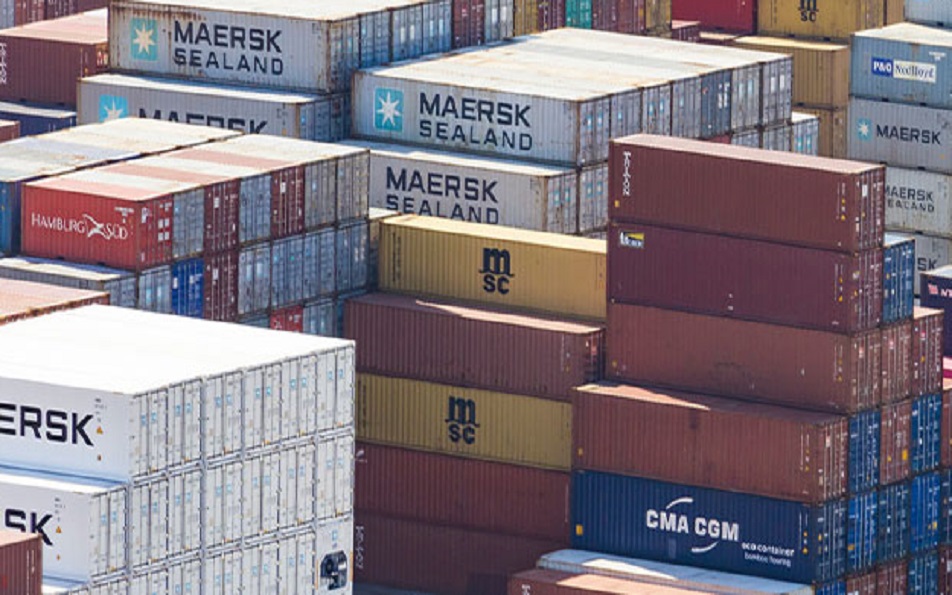
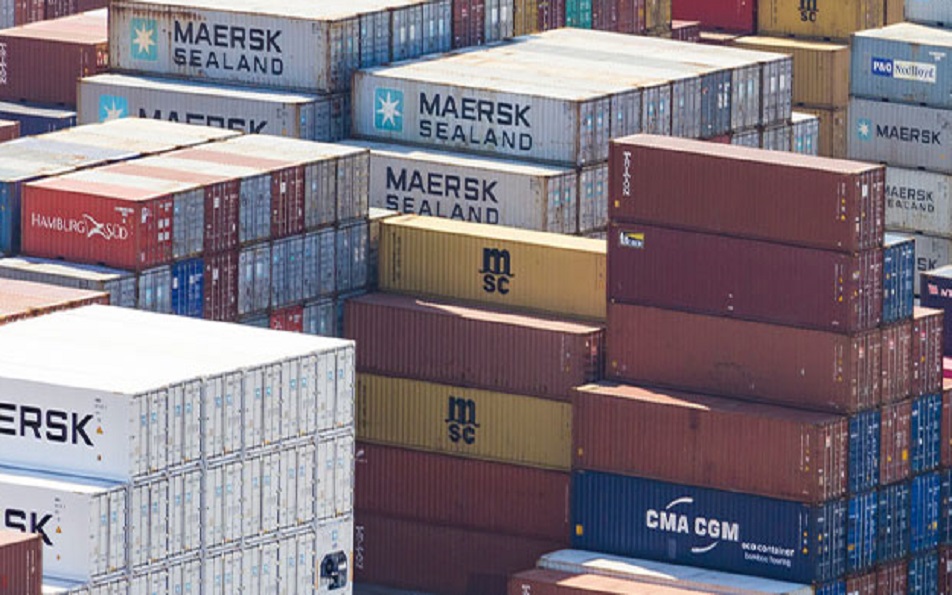
The legal rule was the foundation, but the enforcement surge is what made the shift visible on the water. In the first quarter of 2026, CBP’s 5H inspection program — a document-first hold that freezes pickup and transfer while CBP reviews invoices, packing lists, manifests, and importer credentials — pushed inspection rates at Los Angeles and Long Beach to over 30%, nearly triple the normal level.
Industry data points to 3,826 Chinese-origin containers triggering 5H inspections in February 2026, with 3,137 forcibly returned — a return rate of 82%. The same period saw the inspection rate on Chinese containers at core ports reach as high as 84%. These figures circulated widely in forwarder circles; while the exact numbers should be treated as industry-tracked rather than a CBP-published dataset, the operational reality they describe — document holds, forced returns, and daily storage and detention costs — is consistent across multiple market sources.
The old model was vulnerable to 5H on two fronts. First, shared or borrowed IOR/Bond arrangements are exactly the pattern CBP’s document review is designed to catch; since March 2026, CBP has enforced rules against shared Bond use, with violations leading to denial of entry and high return costs. Second, under-declared values used to make “tax-inclusive” pricing work are cross-checked against ACE historical data and market prices, triggering automatic holds. When a single hold can tie up a container for a week or more and generate hundreds to thousands of dollars per day in port and detention fees, the economics of the old model collapse before the legal rule even takes effect.
The market response was not gradual. In March 2026, ten leading FBA-heading forwarders jointly issued an industry initiative calling for an end to “double clearance, tax-inclusive” operations built on ambiguous or shared importer identities, and for a shift to per-shipment clearance with a verified, real IOR. CBP’s move to retire a large batch of unverifiable IOR numbers effective March 20, 2026 removed the remaining operational space for the old approach.
At TranBay Global Logistics, we are not waiting for the January 2027 effective date to adjust. The compliant path we operate and recommend is straightforward:

The “January 15” question is understandable, but the more useful question is whether your current logistics setup can survive the IOR rule’s effective date. If your forwarder’s answer to “who is the importer of record?” is a company you cannot independently verify — or a shared entity used across multiple shippers — that arrangement is now on a clock.
TranBay’s compliance team can review your current importer structure, confirm whether your shipments are being filed against a U.S. IOR or a foreign IOR, and outline the per-shipment clearance path that fits your volume and product profile. The old model is not coming back. The forwarders that treat that as an operating reality, rather than a compliance headache, will be the ones still moving cargo when the rule takes full effect.
This is the first one.